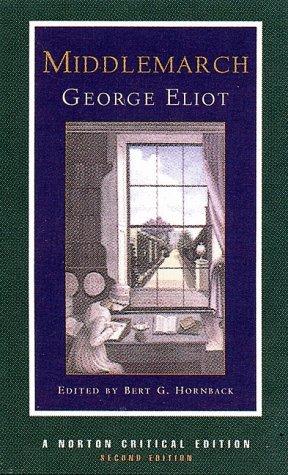
In such a crisis as this, some women begin to hate.
Let’s go baby, things are getting steamy. Rich isn’t sure if he’s turned on or terrified by Dorothea, Cam can’t figure out whether he’d take blood money, and Ben is torn about whether marrying a psychopath is worth it if she’s a hottie.
The middle section of this 800-page whopper is a tournament of injured pride. Casaubon exits early, Will (stupidly?) can’t take or give a hint, Rosamund becomes Lydgate’s worst nightmare, and Fred … somehow fumbles his way back into credibility??
Question of the ep: Is Mary Garth a stand in for George Eliot who, as it happens, was described by Henry James as “magnificently ugly, deliciously hideous.”
Listener mail: a non-native English speaker writes in to say Cam’s sentences are hard to follow. Cam accepts the feedback with unusual grace.
fiction as thought experiment (or: anti-thought experiment?)
Cam: So Benny, did you — I’m thinking of your essay on fiction being a thought experiment. Is Middlemarch the ultimate thought experiment, the best novel ever? Is it a thought experiment?
Benny: I actually did put it in there as an example of a book that touched on themes, but embarrassingly, right now I can’t actually remember what those themes were. I think I said the ethics of divorce, maybe? Yeah, I’m not sure. But that’s actually a good opening question. It’s a study of provincial life, as it says in the subtitle. But beyond that, what are the main themes that it’s dealing with?
Cam: On thought experiments first, because I think it’s a slightly different question, just around your essay. I actually had the thought that this is kind of an anti-thought experiment. With most thought experiments you want to control the variables and just test this one thing, but this is kind of the opposite — it’s like, what would happen if literally too many variables matter and happen all at once, all these crossovers.
Rich: It’s so specific.
Benny: But I think that was part of my point in the essay — that these novels can get specific in a way that no abstract philosophical thought experiment can. And that’s a good thing. More than you could in a short essay, you really get a sense of what Dorothea’s life is like, what sort of trade-off she’s making, what the various ethics of her situation are. You can explore that much more fruitfully in this book than you could in any shorter-form content, especially YouTube shorts. And so it is a thought experiment in that sense, right? George Eliot’s setting up this structure of these people’s lives, filling it in in great detail. And then you can seriously ask questions like, did they do the right thing? What were their temptations? Why did they do what they did? There’s a lot to be had there. Now, whether she did this successfully, like Tolstoy or something, remains to be seen.
Cam: Yeah, I feel like you’re kind of saying every story is technically a thought experiment, which is maybe what you’re saying.
Rich: I think that’s probably true, right? It sounds silly when you put it like that, but it is.
Benny: But I think that’s true — all fiction is a thought experiment, whether it’s sci-fi or an essay or fantasy or historical fiction. And then the question is just how successful is it? How interesting is that thought experiment? So I guess that was part of my point, as trite as it sounds now that you’ve just said it aloud — that all fiction is thought experiment. But the key is that fiction is extended thought experiment.
Cam: Yeah, and more fun to read, usually.
Benny: I noticed that you didn’t like the essay, though. So we might have a problem here. Rich is always hyping me up on Substack. He’s re-stacking my stuff, putting comments underneath, liking it. He’s a bro. You, on the other hand, are just fucking ghosting all my essays.
Cam: I was busy with the book review contest. No, no, I’m kidding. I know it’s bad.
Rich: Off, Cam is shocking on the courtesy likes. He never courtesy likes. Cam’s on Strava — he’ll see that you did a run or a blog post or whatever, and you’ll know that he read it, but he won’t give you the like.
Benny: Can’t be bothered.
Rich: Yeah, I wonder what that says about your personality, Cam.
Cam: Yeah, I think it’s an embarrassment thing, but I should just do it, because it’s nice. It’s kind of like posting your travel photos and your mom likes every one.
Rich: No, embarrassing is when my dad leaves a comment on my blog.
Cam: Yeah, that’s funny.
Benny: Especially a message that’s supposed to be private, like a DM — it has too many private details in it. It’s like, “Nice blog post, son. Your mom and I are going to a cabin this weekend, say hi to Phoebe for me.” And you’re like, this should not have been — this was supposed to be private. That’s tough.
Rich: Yeah, no, my parents are pretty digitally literate. My dad is on Twitter and he tweets into the void. He’s got very strong opinions, just tweeting — zero likes every single time, I assume.
Benny: But he doesn’t care.
Cam: My dad will DM me, and at the end of it he always goes “dash, Dad” — like, from Dad. Every single message.
Benny: You gotta know, man. You gotta know who it’s from. Because now, if you get a message that doesn’t have “dash, Dad,” you’ll be suspicious.
Rich: Oh, that’s clever planning he had for when he gets kidnapped by terrorists.
Rich: Another thought I had about reading this book — back to short form and clickbait and stuff — people’s attention spans must have been so good back in the day. And I feel proud that we made it this far. This is the most slow-burner book I’ve read in ages, where I’m fully hooked and fully invested now, but I probably wasn’t until like 400 pages in, somewhere around there. So you’ve gotta defer gratification and have a strong attention span for a long time to get that payoff. It’s the opposite of a reel — it’s an anti-reel.
Benny: It is an anti-reel, yeah. But the writing is clear enough that at least it’s easy to follow for those first 400 pages. It’s unlike Gravity’s Rainbow, where, even though not that much is happening, you understand what’s happening in the book. And so I think it makes it easier to sit down and make yourself read it.
Rich: It’s easy enough to read, but I didn’t get fully invested in it until this part of the book, which is hundreds of pages in. If I wasn’t in book club, I very much doubt I would have kept going.
Benny: But this is the only book written for adults, according to Virginia Woolf. So of course we shouldn’t expect you to like it. It all makes sense now.
Rich: Yeah.
Cam: Yeah, because — was this a serial? I did wonder that. Sometimes I wonder, all these classics, were they like lit slop back in the day? It’s so long — someone counted, the Count of Monte Cristo is like a thousand pages. So long. That’s potentially just like the season of Lost on TV — very long.
Rich: Dickens is paid by the word. Didn’t we find out Dostoevsky was writing his novels in installments to pay off his gambling debts or something?
Dorothea’s arc: the crisis of rejection
Benny: Okay, well, putting the themes aside for now. Also, I guess we should just remind listeners — part two of Middlemarch, we’re going to do roughly the second and third, maybe a little bit past that. I’ve read up to chapter 67, so maybe we’ll go up to 65 or something. Depending on where you guys are at. But let’s just jump right into it. Rich, do you want to summarize Dorothea’s arc? What has happened over the past 30 or so chapters, since we left her and her adoring husband?
Rich: Yeah, I think we left them in Rome, or maybe they’d got back from Rome and they’d had their horrible honeymoon. So, refresher for the listener: Dorothea is this very bright young maid who gets married to Casaubon, the dusty old scholar, and it doesn’t go well. When she gets back, she starts to actually sour in her feelings towards him properly. Everyone else already kind of hates Casaubon, or at least resents that he’s foisted himself upon her, and she finally gets on board with that too, which was great to see.
Rich: The moment things turn for her is just after Casaubon is found out, from Lydgate, that he’s dying — or at least he has a condition that has a strong chance of killing him. She wants him to let her in, she wants to be a source of comfort to him, and he just totally ices her out. Out of pride — he hates being pitied — and she feels completely rejected, like he doesn’t want her and she’s useless to him.
Cam: Is there a moment she tried to loop around his arm or something? Wasn’t he going for a walk, and he just stood stiff as a statue, kind of stiff-armed her?
Benny: He just stiff-armed her.
Cam: And he wouldn’t say anything.
Rich: He’s stiff in all the wrong ways.
Cam: But what’s going on in his head at the moment?
Rich: Well, it’s going to be even stiffer.
Cam: Remind the readers — Richard was very upset there wasn’t more sex.
Rich: Yeah, I had to write my own fan fiction after.
Benny: The scholar with the mole seduces the young, hot 20-year-old.
Rich: I didn’t even have to put my face over Casaubon’s, because it’s close enough — basically the same.
Cam: So what’s going on in Casaubon’s head at the moment? Why is he being so stiff and cold to Dorothea?
Rich: It’s because he despises being pitied. So maybe a sort of stoicism gone wrong, which is where I part ways with Casaubon — I love being pitied. I’d love it if people were really nice to me when I’m sick, or if I was dying. That’s one of those embarrassing little fantasies you’ve probably had, of being special and everyone feeling so sorry for me. But he just totally rejects her, and we get this banger quote, which I’ll read out:
Like one who has lost his way and is weary, she sat and saw as in one glance all the paths of her young hope which she should never find again. And the jar of her whole being, pity, was overthrown. Was it her fault that she had believed in him — had believed in his worthiness? And what, exactly, was he? She was able enough to estimate him — she who waited on his glances with trembling, and shut her best soul in prison, paying it only hidden visits, that she might be petty enough to please him. In such a crisis as this, some women begin to hate.
Rich: An absolutely killer line. And it could be a recurring theme throughout this episode, I think. I love that: “In such a crisis as this, some women begin to hate.”
Benny: So do you actually think it’s only because he doesn’t like to be pitied, from his sickness, that their relationship gets so toxic? Because it seems to have gone off the rails somewhat before that.
Rich: Well, yeah, there’s all the other stuff we talked about last time too. But this is just the icing on the cake, I guess.
Cam: Isn’t the pity one this funny thing, where he’s sick and she’s going to look after him, but he’s got this jealousy going on as well? He’s worried she’s going to feel superior — that looking after him will make her feel good about herself, and he doesn’t want to hand that to her.
Benny: He does just strike me as a deeply, deeply insecure person. I think we touched on this last time a bit, with regards to his work, but it just seems to extend to every fiber of his being. He doesn’t feel good about himself, and so when she tries to help him with his work, he subconsciously — or maybe consciously — knows that his work’s not good, and so doesn’t want help with it. She tries to be a part of his life in other ways, and it seems like he’s always got this sense under the surface that he’s not very good and she’s going to discover that. So he’s got his defenses up around her from day one, and it just comes off as harsh and terrible to her.
Benny: I think he’s an easy character to pity, because he’s sort of relatable in some ways. Everyone gets those defenses up about some stuff, but it’s just taken to the extreme with him. And yeah, it’s sad, and then it just destroys her life, which is tragic.
Cam: I think also, when he’s finding out he’s dying — well, as Rich said, it’s not necessarily dying. Lydgate tells him, hey, your heart could go at any point in the next 20 years. Might be tomorrow, might be in 20 years. And I think he thinks this might be a relief for Dorothea. He gets that in his head as well — like, she’s probably somewhat relieved, because the marriage is not going well, that he’s dying. And then if she cares for him, that’s her way of showing penitence or something. But she’s actually relieved, and he just doesn’t want to give her that grace. And she’s fallen in love with his cousin — well, has that started happening yet?
Will Ladislaw in the vicinity
Benny: Well, so I have a question about that for you guys. Last time I’d said that she’s developing the hots for Will, and I assumed this even started in Italy, when Will bumps into them and she’s having a terrible time with Casaubon — she bumps into Will and she’s very happy about it, because here’s this person her own age who can match her energy levels, who wants to go do things. I had this sense that she’d sort of started falling for him early, maybe even unbeknownst to herself. But then later, when things take a turn and Casaubon eventually dies —
Cam: No surprise there, right?
Benny: Yeah. And it’s written from the narrator’s point of view as if she actually is surprised about her own feelings later, like she never actually thought about Will that way when Casaubon was alive. And I’m not sure what to make of this. I’m not sure if the narrator’s wrong, I’m not sure if the narrator’s winking at us, I’m not sure if it’s supposed to show that Dorothea doesn’t know her own mind that well. From the reader’s point of view, clearly she was developing feelings, but she just didn’t know it. I don’t know. What do you guys think about that?
Rich: I don’t think it was clear she was developing feelings. I didn’t think she was — but I also misread some of those interactions, so I don’t trust my own judgment. But she tells us in her own words, we get her interiority on it, and it’s very much that she likes him and enjoys his company, but she doesn’t have this forbidden love — because if she did, imagine how guilty she’d feel. We’d be hearing a lot about it, and we hear nothing. I think she genuinely doesn’t consider the possibility until much later, and that keeps it quite pure and wholesome. She’s such a devoted wife, and she really only begins to hate Casaubon literally immediately before he dies. So she doesn’t even have the opportunity to start entertaining rivals for her affection.
Benny: Well, I don’t know if that’s true. Remember, there’s all these moments where Casaubon basically banishes Will from the property and says you can’t come visit anymore. And she runs into him sometimes at social events, and she’s not sure what to do about it. She wants to see him, but she’s also aware that seeing him would go against the wishes and orders of Casaubon. And then, for instance, when Will comes to Dorothea and Casaubon at church one Sunday morning, Will shows up and she’s happy to see him, but knows she can’t actually do anything while Casaubon is there. She basically glances at him and that’s it. So I feel like there is this tension building even early.
Cam: Well, I think Will’s into her — Will chose to go to church to see her. And back in Rome, too. And that’s what I think she was surprised about: Rosamond, or someone, tells her, like, Will’s kind of into you, and she’s kind of in shock. And then she realizes, oh, maybe I always was a little bit into him. Maybe we were flirting, and stuff like that.
Benny: Yeah, maybe I’m just wrong. I don’t know.
Rich: I buy that she could have suppressed those feelings and not been aware of it, and become aware of it later. But I don’t think there’s very good textual evidence that she was feeling that way, because if she was, there’d be so much guilt and self-recrimination, and there’s not a single tiny bit of that. Because think about who she is — she’s such a principled person, she’s so proud and dutiful, and she has such strong religious beliefs too. But anyway, Will — it’s not ambiguous, he very much has the hots for her. And he settles down in Middlemarch, ostensibly to work on the newspaper with Mr Brooke, Dorothea’s uncle, but I think it’s pretty obvious to everyone that he just wants to be in her vicinity. And Casaubon, to be fair to him, clocks that, and he’s right about it. So he banishes Will from visiting their estate, which Dorothea thinks is very shocking, but he’s kind of right about what’s happening.
Rich: And then the huge bombshell is that he writes a codicil to his will that says, in the event of his death, if Dorothea were to marry — and specifically if she were to marry Will — then she’d be disinherited from Casaubon’s estate.
Benny: Yeah, so it’s almost like he’s singling out Will. Not just “don’t remarry,” but “only, don’t marry Will.” Which is crazy, dude. That is crazy.
Rich: It feels like one of those things where you’re daring the universe —
Cam: Like a Streisand effect sort of thing.
Rich: Yeah, exactly, it’s like you’re going to just make it happen.
Cam: She’s like, “Will? I never thought about Will.”
Rich: Yeah, exactly. But this is absolutely scandalizing to everyone involved. Dorothea is so humiliated when she finds out, and the families are so embarrassed they try to hush it up. They try to basically ship Will out of town — they do everything they can to make it all seem like it’s being done with propriety, and to salvage her good name. The two of them meet, and there’s a lot of communication problems, and it takes them forever to just say what they actually feel for each other. But they essentially finally realize that they love one another.
Benny: God, do they go around in circles, though. Holy smokes, man. It’s so frustrating.
Rich: Yeah, it was painful. I was like, come on, tell her, just say it. And this is where we were talking last time about the very delicate verbal sparring, where you have to drop all these subtextual clues — this is where that kind of thing goes wrong, because sometimes people don’t pick up on subtextual clues and you just need to speak plainly. So I was reading all those scenes just begging them to speak plainly and fess up. But they got there in the end.
Benny: They do. But Will also gets frustrated at times, which I can totally see, right? You’re in this situation, you’re trying to be nuanced about it, but she’s seemingly not picking up the hints you’re dropping, and then says something that seems inappropriate for the situation, or just not sufficiently receptive. And he just gets grumpy, gets angry.
Rich: Yeah, they’re both generational bag fumblers, right?
Benny: It’s just a fucking disaster.
Rich: Both of their internal monologues reveal that they think the other one couldn’t possibly be interested. So they screen everything through that defensive measure, and they don’t even listen to the words the other person is saying, because they’re like, there’s no way he actually likes me, there’s no way she likes me.
Cam: Do you reckon her uncle was kind of plain dumb? Because the uncle’s the one who employed Will for his political campaign. And then I think James Chettam — her sister’s husband — is saying, yeah, this is kind of improper, Will shouldn’t be staying there. And the uncle’s just like, no, no, it’s fine, I need Will here. Is he just oblivious, and he wants it purely for the political gain? Or does he actually think it’s okay, that it might even be good for Dorothea?
Rich: I think he cares about his own interests, really, and Will is being very useful to him. But I could see him being a bit oblivious as well, so it’s probably a bit of both.
Benny: But at the beginning of the novel, he’s very focused on finding Dorothea a good husband, and is considering lots of these guys, and is disappointed initially when Casaubon makes his advances, even though he eventually comes around to it. So thinking about who she’s with and who she’s marrying is not foreign to him.
Rich: He also let her marry Casaubon, right? And that was a bad decision. And Chettam even criticizes him — not to his face, but he says some of her friends have not been very thoughtful about what would be good for her, what would be in her interests.
Benny: But I have a bit more of a soft spot for him there, because I think it is unclear at the beginning that Casaubon’s going to turn out to be such a bad match, and such a lunatic, for lack of a better word. And he is only her uncle — he’s not her father. So it’s tough to just put your foot down and say, you absolutely will not marry this guy.
Rich: Yes. But anyway, so Will ends up in this terrible bind, because he loves her, and now he knows that she loves him, and he has these avenues to pursue her open to him. He could ignore the provisions of the will and just marry her and not have any money — and then it would be clear that he wasn’t trying to inherit, right? He’s not getting any money. But there’d be a slight trace of shame in that: it would prove that Casaubon was not being hysterical, that Casaubon actually was seeing the truth. And then the money problem — he feels insecure because he can’t provide her with the good living, the good house and so on that she’d be accustomed to. And the money problem gets solved later with the Bulstrode scandal subplot, which I assume we’re going to talk about. But for now it’s enough to say that he has the opportunity to just get a whole bunch of money that would perfectly solve that problem, and he rejects that as well, because he doesn’t want his honor besmirched in any way. So, coming back to what you said, Benny, about what the themes of this book are — the main one I noticed is pride. Everyone acts in a very prideful way, in ways that can be injurious to their own interests. Casaubon is too proud, maybe Dorothea is too proud, and Will here is being extremely proud — he’s missing out on potentially the love of his life and a fortune that’s just hand-delivered to him, and he says no to both, because he has so much honor and doesn’t want anyone to think poorly of him.
Cam: With the money, I don’t think it’s even about people thinking poorly of him. I think it’s just how he thinks about himself — he views it as blood money.
Rich: Yeah, so maybe we do have to explain the money thing, to get into whether he’s made a good decision here or not. Because I feel frustrated — he’s throwing this away out of pride, and I feel it would be justified to take the money. So, Benny, where do you want to talk about that?
Bulstrode’s pawnbroker past revealed
Benny: Sure, yeah, let me just give the brief gloss on that. So Bulstrode, if we remember from last time, is sort of the town financier. At some point an old fella from his past shows up — Mr Raffles, I believe. And this leads us to suspect that Bulstrode’s past is maybe not as clean as he makes it out to be. So, long story short, he won his money from a family that he married into, which was involved in making money based on gambling and gambling debt, basically.
Rich: I thought maybe it was pawnbroking, and then there was some — they would also steal the items from people. So it was immorality on top of immorality.
Benny: Right, right. Yeah, so it wasn’t gambling, that’s right. It was a pawnbroking scheme that was clearly devious, in the sense that if you brought something that was clearly stolen, they wouldn’t ask questions about it, they’d just trade for it. They’d take advantage of people insofar as they could. Just like those very seedy pawnbroker shops we’ve all seen.
Rich: The kind of pawnbroker that you want to put an axe through their head — and then devote their money to giving directly.
Benny: Yeah, exactly.
Cam: Do the town a favor.
Benny: So Bulstrode had married into this family — married a widow whose earlier husband had died. And that widow’s daughter actually ran away from the family when she was a young woman, because she didn’t want to be involved in this business. She didn’t think it was respectable and didn’t want anything to do with them. So she ran away. And then when her mother — again, this is the woman that Bulstrode married — when her health started declining, she wanted to find her daughter, because she had all this money, and rightfully it was to be her daughter’s inheritance. So they engage what were presumably something like private investigators to go find the daughter. And they do find her. But Bulstrode keeps this information from the mother and tells her the daughter can’t be found — basically so that Bulstrode actually gets all the money when she dies.
Benny: And this young woman who ran away, the daughter, turns out to be Will Ladislaw’s mother. So this money is actually rightfully his. And Bulstrode has known this for a long time, ever since he moved to the area. So he knew who Will was, and that he sort of owes him money. And when this information threatens to come out, he invites Will over and tells him this. Will didn’t know that Bulstrode had been involved with his family in this way, but Bulstrode tells him. And Will basically just declines the money. He says, no — like Cam said, this is blood money, I don’t want anything to do with it. There was a reason my mom ran away, and I couldn’t look at myself in the mirror if I were to take it. But the amount Bulstrode is offering Will is a large sum — I think he says 500.
Cam: 500 a year. But I thought 200 a year was a fine salary, from what we said last time.
Benny: Yeah, so anyway, 500 is a lot. He’d be a pretty wealthy person in the town. And Bulstrode also offers, in addition to that, some other part of his will, so that when Bulstrode dies, Will will get maybe the majority, or some other substantial amount. So this is a non-trivial amount of money that Will is declining.
would you take the blood money?
Rich: So he says, quote:
If I had any fortune of my own, I would willingly pay it to anyone who could disprove what you have told me. What I have to thank you for is that you kept the money till now, when I can refuse it. It ought to lie with the man himself that he is a gentleman. Good night, sir.
So, is it unethical to take that money? Because the harm has been done. All the people whose goods got stolen, who got charged exorbitant interest — there’s no way, presumably, of actually making that up to them. And at present, all of the money lies in the hands of the bad guy who cheated everyone originally and then cheated Will out of his inheritance. So it’s an interesting question. My natural instinct is to say I’d just take the money — but for kind of utilitarian-like reasons, I suppose, and just straight-up pragmatic reasons.
Cam: It’s actually — now that we’re talking about it, now that Benny gave us the play-by-play of what the exact scandal was — this ethical dilemma is kind of similar to Mary Garth as well, who kind of inadvertently turns down money. As we talked about last time, Featherstone — sorry, there’s so many names for the list — Featherstone was the rich uncle of the Vincys, with all this money and this inheritance, which we’ll talk about later. But he wants Mary to burn one of his wills. She doesn’t quite know the consequences of that, but she feels like she could probably get away with it, and she doesn’t want to do it — because of an ethical concern, maybe also a concern of being caught. But again, she could have practically benefited from it, it turns out. There’s this pride, or this honor, of sticking to these decisions.
Benny: I don’t know, it’s hard. It’s hard to say. If you’re in really dire straits for the money, I guess you’d take it. I’m sure I’d take it if I really needed it and it could transform my life. But I do admire him turning it down. And in some ways I do sort of think it’s the right thing to do. I’m just becoming a deontologist over time. I can understand the ethical appeal of just not wanting to be any part of it. And also, in some way, maybe honoring your mom a bit, and her decision — she didn’t want anything to do with this family business, she ran away, and you’re like, yeah, okay, I also want to sever ties with this part of my past.
Cam: It’s kind of impressive, but I think it’s crazy to turn down that money. It’s so much money. Just donate some of it if you feel bad. But you haven’t done anything wrong — it is technically rightfully yours, you’ve been doing Bulstrode a favor, he’s feeling guilty. So, win-win-win.
Rich: I mean, let’s do the — if books are thought experiments, this is a thought experiment. Imagine this exact thing happens to you. What do you do? You’ve got a step-granddad you don’t know about, and he has stolen your inheritance. What do you do? And he made this money through, you know, rug-pulling crypto investors or something.
Benny: No, it’s got to be worse than that. My sense is the pawnbroker backstory is supposed to be pretty bad, probably worse than we’d even view it today.
Rich: But it’s criminal, right? Criminal, but nevertheless there are no legal repercussions for you or anyone else. It’s now just money that someone has. You could just take it and donate it all.
Benny: Okay, well, let’s make it really stark. I’m not saying this is the level it was in the book, but just to get a grasp on the situation. Suppose the money had come from, like, human trafficking. So you find out there’s this fortune waiting for you, but it was all generated by human trafficking. Do you take it?
Cam: Yeah, I take some of the money, for sure.
Rich: And if I don’t take it, it stays in the hands of the —
Benny: Well, someone who’s not actively trafficking now, right? Someone who knows how they got the money. It’s the exact same situation: they married into some family, this family had ties to a seedy business, and then, just because of a sequence of deaths, they’re now sitting on this money. They know where it came from, you know where it came from, and they’re offering you the money. I’m pretty tempted to be like, no.
Rich: Yeah. And there’s also the implication — it’s like hush money too, right? I can’t remember if it’s spoken or unspoken, but the implication is, you’re not going to talk about this now.
Benny: Yeah, yeah. Like, where are you then? Here you go.
Rich: Yeah. And Will is like, I’m not going to talk about it anyway — this is the last thing he’d want to do.
Benny: And it would feel like betraying my mom. Your mom ran away from this family business because she thought it was ethically gross when she was young, and now I’m going to turn around after she’s dead and accept the money? Nah, that would make me feel pretty ethically disgusting.
Cam: Maybe take some money. Spot the difference. No, no, it’s pretty noble, turning down blood money. You ratchet up how bad it is and it gets harder and harder to take, but it’s always pretty tempting. It’s pretty tempting to rationalize it — and I’m not even sure you’re wrong to rationalize it.
Benny: I think the best argument would just be: you take it and donate it all. But that clearly doesn’t seem to be in the cards for Will, right? It seems like he’s either going to take it and use it, and it’s going to be his money, or nothing.
Rich: Yeah, he’s definitely not thinking about it from a utility point of view. It’s not about that at all for him. And there’s not even ways to do private philanthropy that well, right?
Benny: GiveDirectly doesn’t exist yet at that point in time.
Rich: You have to build a hospital or do something. But you can’t do anything anonymously — you have to —
Cam: You have to get the plaque.
Rich: I do admire Will, for sure. It’s a costly signal, right? It’s a costly signal of high integrity. But I just can’t help but notice that every character in here is proud — very proud, and very interested in stains on their character and what people think of them. So I can’t help but read the text overall as a bit of an indictment of that. But for any individual character, it’s good writing, because none of it is exactly a slam dunk — it’s all these edge cases where you’re like, oh, that is a bit tricky. It’s good to be proud, and it’s good to have honor.
Featherstone’s will surprise — enter Rigg
Cam: Yeah, well, as I said, Mary had a similar dilemma, because Featherstone’s also dying, and he’s got all this money, and he asks her to burn the will, and she says no, she couldn’t do it. And again, you’re left to wonder if that was the right decision or not, because it turned out it meant Fred didn’t receive the inheritance from Featherstone, which everyone was expecting. Although I think a character later on kind of reassures her that it wasn’t her fault, for not burning the will. Essentially Featherstone had a couple of wills, and there’s this big surprise and reveal at the reading at his funeral — everyone was expecting Fred to get this massive inheritance, and then it goes to this random character who happens to be in attendance, sort of just by the door, called Rigg, who was Featherstone’s out-of-wedlock son, I believe, and inherited the whole estate. So Fred’s kind of distraught about this. But in terms of Mary’s moral stance — her refusing to burn the will — what do you think, fellas, red flag or green flag?
Rich: Well, she doesn’t know what’s in it, though, so it’s a bit different, right? It could have gone the other way — it could be that she was going to burn the one that gave all of his inheritance to Fred. She has no idea.
Cam: Yeah, but was that even in her calculus? I don’t think it was. She was just like, I can’t do that.
Rich: No, exactly.
Cam: And, man, I respect this sort of thing almost all the time when I see it in others — this refusal to bend any rule or go against their moral core. I don’t have it as strongly as someone like Mary would, but to be honest, I think it’s partly her moral sense not to do it, but I do wonder if it’s also this fear of being caught. She’s like, oh, am I getting in trouble — which you’d kind of worry about, burning the will. And then it made me wonder, what would happen —
Benny: Someone walks in, lighting this will on fire.
Rich: Doesn’t he die right then and there, as well? So genuinely, someone could have come in and found a bunch of ashes in the fireplace and the guy freshly dead, and been like, oh — and this old will says that Fred gets everything. So.
Benny: Yeah, totally.
Cam: It’s also odd to think, like, you can just burn a will — even though I think a character says later it probably wouldn’t have worked. But you just burn a will and solve your problems. Whereas now, in the modern age, we have this digital record of everything, this permanent paper trail. Do you remember there was — I think it was a Chinese guy who ran into parliament — well, maybe not China, but a different country with Chinese people, like Singapore or Taiwan or something — some guy runs into parliament and rips up the bill. Did you guys see that? Runs out of parliament, rips it up: “I just did not want this bill to pass.” Which is kind of funny. It makes me think it must have been performative, because I’m thinking —
Benny: That’s the only copy of the bill they had. Now they’re screwed.
Cam: Yeah, like, they’ll be like, now we’ll just print off another one.
Benny: Should have made a photocopy.
Cam: But what’s funny is you could kind of do this back then — just burn the will and change the inheritance completely.
Rich: It’s not even hundreds of years old. This is like 30 years old, right? There were only paper wills, and stock certificates and bond certificates, and if you lose them —
Benny: Right, you’re screwed.
Rich: I mean, maybe there’s a registrar who has another copy, but often you’re just going to be screwed. It doesn’t even read as that old-timey to me. It’s just how things were up until very recently.
Cam: Yeah, definitely.
Rich: Now you just click a button to sign a document, which seems equally fake to me. I’m like, how do you know? I just typed my name.
Cam: Yeah, it’s like a sign-in. No — Featherstone is frustratingly capricious. Everyone thinks Fred Vincy is getting the money, and then everyone gets surprised. But on his final night he wants to change it up again, like give it back to Fred — just, I think, to have control over his money. I can’t remember — this book was called The Dead Hand. The dead hand was, I think, mainly in reference to Casaubon’s codicil, wanting to control Dorothea after he passed. But Featherstone has it as well. Even as he’s dying, he’s clutching his keys to the safe, and some money as well.
Cam: So Fred’s super distraught and depressed from this, as you probably would be. I had this thought — it kind of felt like a metaphor for our current society, with all this boomer wealth, where we’re all kind of waiting for this big inheritance. Not to the extent that Fred’s doing it, but in terms of financial planning, a lot of people are coming into wealth in 30, 40 years. But then I could just imagine this generational rug pull of boomer wealth, just going down with them, on healthcare and stuff, and then Fred standing there holding the bag.
Rich: We had a friend over for dinner the other night, and her dad has a weird type of cancer that’s not funded by the New Zealand public health system. So he’s on this specialized drug for it, and it costs like 100k a year, or 200k and then 100k every year or something. And I was like, oh man, that’s so sad. And she’s like, yeah, that’s my inheritance. So I guess it’s just black humor, but —
Benny: Damn. Yikes, man.
Cam: Yeah, it’s awkward and awful to talk about and think about. And then Fred’s left with nothing. And it not only impacts him, but it impacts his sister Rosamond as well, a bit — I suppose it’s implied she would have got a bit of it too, because her father thought she’d be fine financially when she’s getting married to Lydgate. But Fred kind of finds a new path.
Benny: He does.
Fred finds his feet with Caleb Garth
Cam: He thinks about joining the church, but he’s really ambivalent about that, because Mary doesn’t want to marry him if he goes into the church, but his dad really wants him to. And then he finds a new role, where he ends up working a little bit with, or for, Mary’s father Caleb — originally doing the railway, building the first railways in Britain. And he’s not minding this work thing, and Caleb’s just this total stand-up guy who wants to give him a fair chance. So this seems to be a turnaround for him, and we’re being a bit more sympathetic.
Benny: So Fred basically makes his intentions known to Mary, and tells this to Mary’s parents, who feel a bit torn about it, especially her mother. She’s not the biggest fan of this plan at the beginning, because she doesn’t think Fred is a responsible, stand-up guy. But Caleb Garth is more sympathetic to him and offers him this job, even though his handwriting sucks.
Rich: It was funny that academics have worse handwriting than working people, because they write in very elaborate ways, and all their vowels look exactly the same and their consonants are taking up three different lines and stuff. There’s some class commentary in that detail, I think.
Benny: It was funny how big of a deal that was.
Cam: Yeah, it almost went on a bit of a boomerang. I was like, what are you even doing? You do 10 years of schooling and this is what your writing looks like?
Benny: What’s the point? He’s like, yeah, sure, you’re good with your hands, but you can’t write anything.
Rich: Something about how, if you just print mechanically and simply, the letters, there’s a lot more utility than if you learn a beautiful flowing cursive that has to be deciphered. That would be impractical when you have digits you need to write out clearly. Whereas Fred, who’s got lots of schooling, that makes him very fancy.
Farebrother’s impossible magnanimity
Cam: I think Fred’s family — I don’t think it’s super upper class. I think they have money, but they’re a little bit more striver. There’s this love triangle going on — well, not really a love triangle — between Fred, who’s in love with Mary, and she’d die for him but wants him to be better, and then also Farebrother, who was connected to Lydgate earlier as the person potentially going to be employed for the hospital, but he fancies Mary as well. And finally Fred asks Farebrother if he’s the one to be his — is it “envoy,” there’s a word for it — to be the one to tell Mary, to express Fred’s love to her and ask if she’ll take him. And Farebrother very magnanimously does it, even though it’s kind of against his interest. And Mary kind of chooses Fred. So no matter how slack Fred can be, she’s willing to stick by him.
Rich: Yeah, the girls like the bad boys, you know?
Cam: Also, just on one of your questions, Benny, around themes — I’m not sure if it’s even a theme, but it’s this connectivity of everybody. This provincial society of Middlemarch, this web, this interconnected network of all these characters. There are kind of two arcs, right — the Dorothea arc and the Vincy arc — but then they interconnect.
Benny: Yeah, it’s kind of amazing. We’d all be so lucky as to find a Mary Garth who’s in love with us, because she does really great things for Fred, right? She sees this promise in him that he’s not fulfilling. And basically, by holding off on requiting his love until he’s made more of himself, she encourages him to do exactly that, to live up to his potential. That’s very fortunate for Fred, that Mary exists and is willing to be this patient. But you also can’t help feeling pretty bad for Farebrother, because he’s in love with Mary as well, but Mary very clearly makes her choice.
Benny: And honestly, he seems like a stand-up guy. From what we know about him, he doesn’t seem to hold this fact against Mary or Fred. In fact, in a chapter I’ve just read, he finds Fred at a gambling house one evening. And Fred’s actually not gambling — he’s just there socializing, because he has a couple of evenings off work. But Farebrother sees Fred and worries he’s falling back into his gambling habits and is about to lose more money. And remember, at this point he’s already lost 90 pounds or so of Caleb Garth’s money — a lot of money — which he’s slowly trying to pay back over time. Anyway, Farebrother gets nervous that he’s falling back into his old habits, and very tactfully tries to pull him out of the situation, tries to make sure that’s not what’s going on. And when he realizes that’s not what’s going on, he just leaves, says goodbye, and wishes him well with Mary. And quite frankly, I can’t imagine having that level of equanimity in that situation, when you’re in love with this guy’s fiancée-to-be. So I do have a lot of sympathy for Farebrother.
is Mary Garth a George Eliot stand-in?
Rich: Do we think Mary is a bit of a stand-in character for Mary Ann Evans, the author? For Mary, it’s because she’s described as plain — not ugly exactly, but, you know, I think someone straight up says she’s not very good looking. And no shade on George Eliot, but she’s also, I think, not a great beauty.
Cam: Well, yeah. So Mary Ann Evans had, I think, some romance with Herbert Spencer, who was a big intellectual of the time, sort of like the Bertrand Russell of the time. It was this massive thing. He’s one of those examples of someone people don’t read so much anymore, but everyone was reading him at the time, and people thought he was probably going to be bigger than others. But he actually turned down Mary Ann Evans, because he was like, she’s amazing, she’s the most amazing, intelligent woman I’ve ever met, but there’s just no romance there.
Rich: Have you done a bit more digging, Cam?
Cam: Yeah, she did end up with another person, who I hadn’t heard about, but who was actually very supportive of her writing career — another writer. Because I was wondering if there was a real-life Casaubon or Will.
Rich: Oh man, they’ve kind of done her dirty with that photo that does the rounds, where she looks like she’s got the center part and stuff. But she actually looks fine in the other pictures on the wiki page.
Cam: I thought that was the one where she looked better —
Rich: The one where she’s older, the photograph of her.
Cam: Oh, no. The one that’s on her wiki and on her books is when she’s a redhead, which doesn’t seem to match with her older photos.
Rich: Oh, whoa. There’s a section on the wiki that says George Eliot was considered by contemporaries to be physically unattractive. So she’s a known —
Cam: That’s why Herbert Spencer didn’t marry her.
Rich: Oh my gosh. Whoa, did you see what Henry James wrote about it? He wrote, of his first meeting with her:
To begin with, she is magnificently ugly, deliciously hideous. She has a low forehead, a dull grey eye, a vast pendulous nose, a huge mouth full of uneven teeth, and a chin and jawbone qui ne finit pas. Now, in this vast ugliness resides the most powerful beauty, which, in a very few minutes, steals forth and charms the mind, so that you end, as I ended, in falling in love with her.
Rich: Wow, that is savage. Henry James — William James’s brother — a famous writer who we clearly ought to read.
Benny: Wait, who said that? Wow.
Cam: But yeah, so Mary’s definitely described as the plain one compared to Rosamond, but Fred’s really into it. And you assume Fred’s probably good-looking, even though he’s a —
Lydgate and Rosamund: the marriage goes off a cliff
Benny: Okay, fellas, I have at most 20 more minutes here, so let me give the brief gloss on Lydgate, and then let’s move towards wrapping it up. So what has happened to Lydgate since we last spoke? Quite a bit, actually. He ended up getting engaged — I can’t remember if we actually covered this last time, but this happened around chapter 31 or 32, just after we broke last time. And the engagement sort of came out of nowhere, to be honest. As we remember, Rosamond was obsessed with him, imagining herself engaged and married to this upper-class gentleman, and that this would totally transform her life and she’d be the envy of all the other women in the town. So she’d developed this deep crush on him, and Lydgate originally enjoyed flirting with her but wasn’t actually that interested romantically. He thought he had lots of time ahead of him, and wanted to establish himself in the town before he thought about marriage, but was flirting with her a lot and giving her mixed messages.
Benny: And then he realized maybe he was giving her mixed messages, and pulled back from visiting the house as much. And then he had to go back over there one day for medical reasons, I believe, and ran into her, and she was sort of pouting. And in some way that’s not entirely clear to me still, this ended with them making up and getting engaged. So it’s a spur-of-the-moment-style engagement. And they both feel good about it initially, but the marriage very quickly careers right off a cliff.
Cam: Yeah, she’s just like a crazy bitch — is that why it’s cratering, pretty much?
Benny: I mean, okay, I’d say they both got married for the wrong reasons, right? She very clearly just married for the station. They didn’t know each other that well. She didn’t fall in love with his personality. Every time we got a glimpse into her psychology, she was imagining herself as this wealthy wife of this upper-class man, and the sort of power and privilege to wield from that position. It had nothing to do with family or him or anything like that. And so she expects this upper-class life. And he, meanwhile, is trying to establish himself in the town but just ends up living beyond his means. He buys a big house for them, decorates it in lavish ways they obviously can’t afford, and just descends into debt. Eventually he has to tell her this. She’s not at all pleased, because she just doesn’t believe she deserves this. And she’s a very unhelpful partner in this situation, because she has this psychological quirk that, I don’t know, maybe a lot of us have, but she can never imagine herself in the wrong. She’s just totally unable to think that in any situation she has ever done anything wrong. So she goes behind his back to ask other people for money, including his family, to help fix this, which makes him look really bad. And she’s really putting up a fight. He’s like, let’s try and move houses, downgrade the size of our house. And she basically goes out of her way to make sure that doesn’t happen.
Cam: And that was going to solve the debt problem, right?
Benny: Yeah, or at least take a big part of the debt. She just stymies all his efforts.
Cam: Sabotage. I quite enjoyed that chapter, actually — just describing how he’s explaining it and she’s just not getting it.
Benny: Yeah, it’s intense.
Cam: He’s like, we are so fucked, I owe so much money, and she’s like, it can’t be that bad, we’ve got to keep the house, how much do we owe anyway? And it’s like, well, even if we sell the house, we owe a thousand.
Rich: But she’s not crazy — she doesn’t yell and scream at him or anything. She’s completely calm and composed the whole time. She does it with ice in her veins, man.
Benny: Makes it worse, I think. She’s like a psychopath. But to be fair, he doesn’t handle it super well. He should have told her earlier. But I do have more sympathy for him than for her. She comes across as absolutely batshit.
Cam: Yeah, I’ve grown to quite like her as a character. Not because she’s likeable, but just as a kind of archetype of a certain type of person.
the sexual politics of Lydgate’s mistake
Rich: I thought the sexual politics in this section was interesting, because Rosamond is so unsympathetic — at least to me, and I assume to you guys. I was very much on team Lydgate, because she’s being unreasonable, and not only stymieing him but making the whole thing worse. But we really hammer home here how much Lydgate fucked up by thinking she was just a pretty ornament who was perfectly amiable and would do whatever he told her. And he’s just so surprised, constantly, to find out that she has desires of her own and an iron will, and is incredibly devious and persistent — some traits that you’d actually really admire. And he’s just like, you’re meant to be my pretty wife, my pretty little wife.
Benny: Yeah, my compliant little wife who just does whatever I want.
Rich: Yeah, so that’s on him. But the sexual politics is interesting, because surely George Eliot is writing this for us to condemn Lydgate for that — but he doesn’t really come off that way, because she’s so unlikable. I had to think hard to get there. It was much more like, Rosamond’s the villain, and Lydgate just played his part. But Rosamond has been raised to be an ornament as well. She’s just trying to do exactly what her entire life has prepared her for: to keep house in a nice house, have all the right things, and talk the right talk. I do feel sympathetic to her, but I had to work quite hard to feel that, whereas I sympathize with Lydgate extremely easily.
Cam: I think she’s mainly painting Rosamond as the villain.
Benny: It’s also interesting that I feel significantly more sympathy for Fred, her brother, and yet they have some of the same characteristics, in thinking the world owes them something. So Fred also has this notorious streak where he thinks he shouldn’t have to work for stuff, and shouldn’t have to do various icky tasks that are beneath him, and that things will eventually work out in the end. And Rosamond has basically the exact same perspective.
Cam: Just on that quickly, there’s a good quote on his expectations. When he’s trying to think of what sort of job he could get, once he realizes he’s not inheriting, it’s: “What secular avocation on earth was there for a young man whose friends could not get him an appointment, which was at once gentlemanly, lucrative, and to be followed without special knowledge?” He was just so picky — like, the perfect job.
Benny: Yeah, exactly. But somehow these expectations of life manifest themselves in different ways in both of them, and in definitely more sympathetic ways in Fred’s case. Whereas Rosamond just comes across as this pretty, privileged girl, where everything must go her way — otherwise she’s going to work tirelessly behind your back to sabotage any effort that diminishes her quality of life, even one iota.
Cam: I mean, we are let down by Fred. I think we think badly of him, and he’s somewhat redeemed — he’s redeeming himself. He seems to have a good heart.
Benny: But he’s reflective somehow, right? He feels bad about it, in a way that I think Rosamond doesn’t.
Cam: Yes.
Rich: Yeah, Rosamond hasn’t cracked an inch. She is just completely sure she’s in the right, and she’s growing to hate Lydgate. He’s beyond in the doghouse, I think. I have to guess that there’s going to be a divorce, or something dramatic is going to happen.
Cam: It reminded me a little bit of the Stoner marriage as well, the dynamic. And she’s really hot, right, as well? I think she’s the hot girl of the town.
Rich: She’s the prettiest girl in town.
Cam: Yeah. So Mary Ann Evans is definitely making her the villain.
Benny: I’m excited to see what happens with that storyline. I mean, all the storylines, honestly, in the final third. It’ll be some good reading.
Cam: Well, actually, didn’t she tragically have a miscarriage, from horse riding? Does that resonate?
Rich: Yeah.
Benny: Ah, yeah, I forgot that part.
Rich: Well, it’s not clear if it was from horse riding, but —
Benny: Lydgate thinks it’s from horse riding.
Rich: Yeah.
Benny: But she claims it wasn’t, that it would have happened regardless. And I’m not sure if we’re supposed to take one person’s side there. But she’s hanging out with his family and — yeah, it’s weird.
Cam: I mean, maybe one good thing from her — I’m not even sure if this is good or not — but she’s the one, I think, who reveals Casaubon’s codicil to Will Ladislaw. I think she’s the one who tells him, and he’s really angry about it.
Rich: But even that, she doesn’t do out of the goodness of her heart, right? She does it to agitate him.
Cam: Yeah, maybe that’s not good faith.
Rich: I liked Rosamond in the first third. I thought she was nice. I did not see this coming at all. I thought it was an intellectual mismatch or something, where she clearly didn’t care about his doctoring ambitions. But it turns out to be a much worse matchup than just that, and she’s so status-hungry.
Benny: Yeah, I kind of thought she was just innocent and a bit naive, but she didn’t seem like —
Cam: Just that chapter when she’s being really unreasonable, I was just like — have you ever interacted with someone, dated someone, who’s just been so unreasonable, and you’re just like… Lydgate was just pleading to her. He’s like, I’m trying my hardest here, I don’t want to lose the house.
Rich: It’s extremely triggering, and that’s why, as a male reader — or perhaps just as me reading it — I related so hard to Lydgate, and had to really reach to sympathize.
Cam: George Eliot did well.
listener mail: Cam gets roasted
Benny: All right. Well, that’s the end of part two. It is turning out to be an absolute banger of a book, so I’m excited for part three. Do we have time for some listener mail before we go?
Cam: Yeah, because I think we mentioned that, so we should do it. Maybe we should have mentioned it at the start, but we got an email from Kiosk, who — I’m not sure if I should be the one reading this. We got a new email; I burned the previous one. Benny, what did Kiosk tell us?
Benny: We can just read the whole thing out, it’s pretty short. So Kiosk says: First, I want to say that the show is great. The choice to go beyond plot summary and dig into the ethics, philosophy, and politics around each book is what makes it worth listening to. I actually had a thought — do you think this was written by ChatGPT?
Rich: Yeah, I had the same thought. There’s a couple of tells in there, eh.
Cam: You can’t fucking say that when you’re reading it out.
Rich: No, because they said English is not their first language. So maybe they ran it through ChatGPT.
Benny: I mean, yeah, I don’t blame them. I think probably 70% of the planet is writing emails with ChatGPT these days, but I did get that sense.
Rich: No, I want to say — I consider it spiritually bankrupt to send mail that was written by ChatGPT in a context like this. But I’m giving an exception, because it’s a person who maybe isn’t fully confident in their English. I think I’d still rather receive a somewhat botched but authentic English-language email, to be honest. But oh well. Anyway, we’re going to get the roast in before we get roasted.
Cam: Well, actually, it’s not too surprising, because the audience I struggle with most are those that probably don’t speak English at all. So I’m doing an example of his complaint —
Rich: Sorry, what?
Cam: No, I was just talking shit. I was just saying, the audience that doesn’t —
Rich: You struggle to capture audiences who don’t speak English.
Cam: Like me, the most — people that don’t speak English, they do —
Rich: Well, we’re going to get to the complaint, we haven’t read it out yet.
Benny: Yeah, we’ve got to get there. Okay, so, two pieces of constructive feedback, if I may. One: the intros run a while before orienting the listener. The opening banter is amusing, but it can take a few minutes before the book even gets mentioned, which makes it a little hard to get your bearings, especially as someone recommending this show to others.
Rich: They talk about the Omelas episode, and that was the one where I had to shoehorn in my half marathon time. So there was a lot of running chat up top. So, yeah, I’ll cop to that. I just needed everyone to know about it. I couldn’t find a way to edit that out.
Benny: The listener should know as well that this is a big part of our — I mean, none of us live in the same country at the moment. So this is also our social time, when we end up shooting the shit about various things, seeing how each other’s lives are going, sharing any news, and talking about the latest Scott Alexander essay or whatever. So unfortunately, you get caught in the crosshairs of that. We edit a lot of it out, but not all of it. So you still get caught in the crosshairs. And also, we were really focused on the podcast as product at some point, but have sort of taken a step back now. I mean, we still release everything, but —
Cam: Now we just focus on our deep philosophical insight instead.
Benny: Exactly. We’re pure, 100% analysis-driven.
Cam: Which is good to hear, we’re doing well.
Benny: So, second point of feedback —
Rich: Wait, just on that for a second. I can sympathize with that, because there’s two different types of podcast listening experience. One is, say you read a book — like Alice or whatever — and you search to see if you can find discussion of it, and you’re coming in totally cold, you just want to hear about the book. And it can be very annoying to hear a bunch of bullshit at the start — like, shut the fuck up, just talk about the book.
Cam: Especially if they’re try-hard and stuff.
Rich: Yeah, and they’re talking about their running — why would you care about that? But secondly, all of my favorite podcasts are parasocial. I have a fake friendship with the hosts that develops over time, and I love to hear a bit about their lives. So I don’t know exactly how you square that circle, except chapter markers, and keep it — when I edit episodes, I usually cut off all of our chat except maybe one or two minutes of it, and even then —
Cam: Yeah, I think it’s fine. And for the marathon one you do 10 minutes.
Rich: For the marathon one, exactly. It’s special. Actually, you know what, listeners — write in and tell us, is this choice right or wrong? I’m curious.
Cam: Tell us, on the Omelas episode, was the intro —
Rich: And you have to put your half marathon time, to know how I should — yeah, exactly.
Benny: If we should listen to you.
Benny: Okay, so the second point of feedback. Cam can sometimes be hard to follow. His sentences occasionally trail off or shift direction mid-thought, and I can’t always understand what he is saying. And then, in parentheses: English is not my first language. All right, Cam. Well, the gauntlet’s been thrown down.
Rich: Cam, you want to defend yourself?
Cam: It’s funny — no, I think, unfortunately, it’s kind of accurate. I mean, yeah, he did say he doesn’t speak English, so that might be part of it.
Benny: Wait, he said English is not his first language. He didn’t say he doesn’t speak English.
Rich: No, of course — we think he’s like —
Cam: He’s writing his email in ChatGPT, lads.
Benny: Let’s not get carried away here.
Cam: I don’t think he’s the arbiter of verbal IQ. It’s funny, I was telling the missus about this.
Rich: I think he touched a nerve.
Cam: Yeah, no, I think he definitely captured some truth. I was telling the missus about this over the weekend — Ellen — and she was being all sympathetic, trying to think of all these reasons why. And I was like, oh no, no, I think I just do this sometimes, unfortunately.
Rich: You’re Chinese.
Cam: Yeah, yeah, exactly. Yeah, that’s my response. Yeah, okay, so I’ll work on that.
Benny: Yeah, it’s a genuinely hard thing to work on.
Rich: But it is a skill issue, right?
Cam: Nah, dog.
Benny: I mean, to some degree. To some degree it’s certainly a skill issue. You can learn to become more eloquent, for sure.
Cam: Yeah, no, to some degree. Go to speech class.
Rich: Benny speaks the nicest, and he’s had the most experience of podcasting and presenting, and you’re kind of trying to improve, probably, on some level.
Benny: Yeah, absolutely. But I also don’t think I’m the best. I think you, Rich, are probably the best.
Rich: I’m trying. I try hard. I’m going to try hard.
Cam: I’m definitely trying. Well, there’s an element of just natural eloquence, and I think I’m doing it right now — I interrupt myself mid-sentence and go on a kind of stream-of-consciousness discussion. It’s just my way of talking. I wonder, do you guys use speaking as a way of thinking? I was wondering if I do that more than you guys. Or are you guys also doing that, but maybe just speaking in more clipped sentences?
Benny: Often I realize what I think about something in the middle of saying it. There’s a thought I’m trying to get myself to, and I start speaking with that thought in mind, but might realize mid-sentence that I’m wrong, or I mean something else, and then pivot. But I try and make that clear in the speech itself, instead of just pivoting mid-sentence. I’ll often say, oh, I’m realizing as I’m speaking that I’m wrong about this, or maybe this idea could be fleshed out more.
Cam: One issue is, I think sometimes it perpetuates itself with me, because I’ve heard myself sounding like a retard, not being able to get a word out, and then I worry about doing that, and then maybe do it.
Benny: The Theodore complex.
Rich: Yeah. The other thing that just came to mind is that both Benny and I get feedback — I mean, you get feedback in real time, hearing yourself — but we get feedback when we listen back, because Benny, you edit increments, right? Or at least you’ve edited some of it, and I’ve edited most of our show. So I hear a lot of the bad discursive stuff that should probably be cut out.
Cam: Yeah, I noticed that with editing as well, and it was kind of revealing.
Benny: I mean, in day-to-day life you very rarely speak in paragraphs.
Rich: That’s why this is easy, because we have time to prepare. I think of what I want to say, and I kind of have it in my head. It’s much easier than a random conversation, where I’m going to be pretty choppy and inarticulate. But here, at least, I can think — I’ll be in the shower thinking through what I would say if someone asks me about XYZ. I do that all the time, actually. I just realized — not for this, but for all kinds of stuff, like, what do I think about this? It’s like a voice I have in my head, and how would I explain it in a really nice, succinct, eloquent way. And then here you can just be like, blam, blam, blam. Obviously, when you have discussion, there’s lots of stuff you have to work through live as well, but at least quite a bit of it is cached in my head somewhere, ready to be regurgitated.
Cam: Yeah, there’s nothing quite like someone bringing up something you’ve thought about lots, and you’ve just got this perfect fucking response for them. It’s so well thought out, it covers even the things they haven’t brought up, just because you’ve had that argument before, or wrote an essay on it. I just — one final comment. I don’t feel bad about myself, but I wonder if I’m like that guy who’s making the show way worse with this sort of stuff. Because I remember I used to watch this rhyme show — because I’m weird, I was learning to rhyme — and there was one guy, sort of a generational talent, with strong comedic talent as well, trying to make this show. It didn’t quite break through, but there was this other guy he was working with who was just not very charismatic and was making the show way worse — but was obviously needed, and was, I think, setting up the show; he had some of the ideas.
Rich: All right, guys, write in and say nice things about Cam. We’re inverting the usual formula.
Benny: His confidence is plummeting.
Rich: We’ve gone too far.
Cam: I’ve turned into Casaubon.
Rich: It’s actually funny, because I know you so well, Cam, and because I’m a New Zealander, I can understand you perfectly. I’m never wondering what you mean, never mishearing you — even if sometimes you mumble or change directions mid-sentence, I can always understand what you’re saying. But maybe some people can’t. That could be true, because of the accent and the verbal stuff, and because they don’t know you.
Cam: It’s a little bit Trumpian, actually, now I think about it. I had received that feedback at work once as well — they said my writing was fine, but sometimes when I speak in meetings I can go all over the show. So I was aware of it.
Rich: All right, write in and tell us if you speak English as a first language or not. And record a clip of you saying something off the cuff.
Cam: Well, the other thing is, it is hard speaking extemporaneously, right? Nowadays, when I listen to a podcast or YouTube and someone — especially when you can tell it’s improv, extemporaneous, and they’re very good at it — I’m so impressed now.
Benny: That’s so impressive, yeah.
Rich: But the trick of podcasts is that they almost never are. Whenever you hear an interview show that’s really polished, they have not sent the exact questions, but they’ve told people to prepare. This is what every professional podcaster does. And then if the guest is a pro too, they’ll have done what I was talking about, caching their thoughts, so that when they ask “what’s your new book about?” or “what’s the theme of blah,” they just go bam and they have a nice little soundbite.
Benny: No, but there’s lots of discussion-based podcasts these days, right? And arguably those are the most popular ones — just sit down and talk to someone for three hours. The Rogans, the Bill Mahers, the Chris Williamsons — all of these that are just sit-down —
Cam: Now, Chris — I don’t think Chris would fit into that. I reckon he’s more rehearsed.
Benny: Do you think he’s prepped? I don’t actually listen, so I’m not sure. I thought he was in this realm of —
Rich: I can tell you firsthand.
Cam: Yeah, Richard’s got his notes, right?
Benny: Yeah, I forgot. We should say — people should go listen to that. Rich was on Chris Williamson’s show.
Cam: Yeah, Kiosk, listen to that. Get Kiosk to listen to that, mate. Remember, a few pauses, a few clauses in that episode.
Rich: I remember that, because my internet was shitty and we got off to a horrible start. I think I just bungled the first question, and I was like, can we just start over? And we did a do-over. Yeah, I can’t remember now, to be honest.
Benny: You did okay. But did you know the questions in advance?
Rich: But my point is that when you’re talking about a book, promoting a book, you should anticipate the questions even if they’re not provided, and have, like, here’s my example, here’s my talking point, here’s how I’m going to explain this.
Cam: Yeah, you should have takes, right?
Rich: And that’s just kind of intuitive to me. Same thing with heavily produced podcasts — they’re literally probably reading out scripts, having prepared everything they’re going to say in advance. So it’s tough to compare against that. Obviously we’re never going to be that, but I think we can be halfway there, of having come reasonably well prepared with takes.
Benny: All right. Join us next time, part three of Middlemarch, and write in. Do You Even Lit — that’s douevenlit@gmail.com, with just the letter U. Peace.
Rich: Yeah, sweet, see you later.
Cam: See you guys.